blog 66: In which I take part in a BLOG HOP.

My friend and super-talented Brisbane-based poet, critic and editor Zenobia Frost has invited me to take part in a blog hop. It goes like this: I ask myself the following four questions, answer them and then pass the baton on to three fellow writers to do exactly the same, thus keeping the blog hop rolling for all eternity!

I first met Zen when I presented her with a poetry prize at the 2004 Literary Awards for school students. She was brilliant then and since has become even more dazzlingly brilliant. Check out everything about her here: A Storm of Tea Cups.

Anyway here I go answering my own questions:

  1. Michael, what are you working on at the moment?

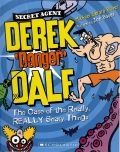
Well Michael I don’t usually talk much about my current projects but I like the cut of your jib so I’ll answer you. At present I’m working on completing three stories for younger readers concerning the adventures of Secret Agent Derek ‘Danger’ Dale (SADDD). Derek first appeared in the Eric Vale series of books. I have written two of the SADDD stories and will be starting on the third as soon as I can come up with a bizarre enough storyline! As with the previous Eric Vale series, all these books will be fully illustrated by my amazing son Joe Bauer who as well as being an illustrator is also, with his wife and partner Rita Artmann, a film-maker (Artspear Entertainment). After the Derek Dale books are done I will be writing more YA.

scan0151

Cover of the first Derek ‘Danger’ Dale book due out July 2014.

2. Michael, how do you think your work differs from that of other writers in your genre?

You know Michael I’m little surprise, and I might say, slightly offended that you’re not more familiar with my work and therefore feel the need to ask these questions, but I will attempt to remain civil and respond appropriately.

I like to think that my work differs from that of other writers in my genre by being … well … better. Just kidding! I’m not sure really. I’d like to believe that my work for both older and younger readers has a nice mix of depth and intelligence and heart. But so do many other people’s works. I guess in the end, what makes my work unique, is what makes anyone’s work unique – each story is in some way a version of life filtered through my eyes, mind, heart and experiences.

3. Mike, why do you write what you write?

Mike? Let’s not get too familiar here. I don’t like the cut of your jib that much! But, to answer your question, I think I write what I write because it’s what I’m passionate about and because I love words and stories. I’ve never gone looking for a story. They have always found me – often in strange ways. I think like most people, I write what I write, because the thought of not doing so, is unbearable.

4. Mr Bauer sir, what’s your writing process, and how does it work?

That’s more like it!

It’s probably very generous to label what I do a ‘process’ but for what it’s worth basically this is it. A story starts for me with some tiny thing that I become curious about. In the past, stories have developed from a line in a book, a picture, a childhood memory, a name and an old movie. It’s like finding one interesting piece of a giant jigsaw puzzle where you’re not sure what the final picture will be, but you’re desperate to find out. In order to do that, you start to imagine what connects to that one piece you have and gradually, a bit at a time, the image and the story grows and forms.

I think about a story for a long time before I start to write it. I never type a word until I know the ending of the story. Often for me, the motivation for struggling with every other part of the story, is earning the privilege to write that ending. Most of the planning of the storyline, I do in my head. When that becomes too difficult or complicated, which it always does at some stage, I write rough and messy notes and outlines down on paper.

The other thing is that I never talk much about what I am writing or show it to anyone else until it is completely finished. Good or bad, right or wrong, it has to be just my story first. I also don’t think much about a target audience. I basically write for me. I write the stories that move me in some way – make me laugh or cry. After the manuscript is completed to the best of my ability, my wife will be the first reader, followed by my publisher and editor. If they like it, then I might be game enough to show it to my son or daughter.

Thank you Michael for those informative and entertaining responses. Just hearing you speak and being in your presence is a humbling experience and it has made me a better person.

Really? You’re not just saying that because you feel you should?

Actually I am.

Oh.

So there it is. And now it’s my pleasure to pass on the Question-Answering Baton to these three gorgeous and talented Brisbane writers and good friends. Click on their names to check out their author sites/blogs.

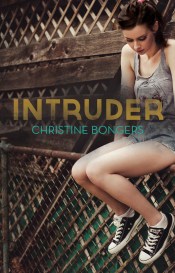
CHRIS BONGERS: Chris is a former radio and television journalist who is now happier writing fiction. Her latest Young Adult novel Intruder has just been released. Her other works include Dust, Henry Hoey Hobson and Drongoes.

RTS night 20th Feb 2014 (16)a rha_intruder_front-cover-21-03-141

SHERYL GWYTHER: Sheryl is a writer for young people with a passion for reading, painting, printmaking and photography. She is also Assistant Regional Advisor for the SCBWI Australia E/NZ region. Her published works include Secrets of Eromanga,  Charlie and the Red Hot Chilli Pepper and Princess Clown.

60324_467834638689_571468689_6490956_8284201_n Secrets-of-Eromanga-cover

 SAMANTHA WHEELER: Sam loves to write about animals and adventure. I had the pleasure of launching her first book Smooch and Rose a story set against the continuing destruction of koala habitat. Her next book Spud and Charli is about ‘friendship, horses and bats’ and is due out in September 2014.
CAM00387 852967248dd3e6cb3942a1fe6af42945_S

Cheers
Michael

Posted in Uncategorized | Tagged , , , , , , , , , , , , , | 3 Comments

blog 65: In which, due to a blog upgrade, I post some actual VIDEOS!

Previously I’ve only been able to post links to videos, but now, at great personal expense to myself, I’m able to post the real thing!

To celebrate this amazing milestone, here are a few oldies but goldies.

  • Joe and I will be doing a session at the Brisbane Writers Festival on Friday September 5th 2014. This will be the first time we’ve ever been on stage or presented together. We’ll be discussing the creation of the ERIC VALE series as well as the new spin-off books featuring the character SECRET AGENT DEREK ‘DANGER’ DALE. Here’s a taste from the Get Reading promotion:

  • And here’s Joe’s terrific trailer for ERIC VALE EPIC FAIL. Coming soon will be Joe’s hilarious DEREK ‘DANGER’ DALE trailer.

  • Here’s an interview that was filmed while I was at the Sydney Writers Festival a few years back. There are 5 more of these interviews available on YouTube. In the others I talk about such things as Plot, Characterisation and Inspiration. I also do a Reading and give some Writing Advice.

  • If you teach in an isolated school or find it difficult to get authors to visit for whatever reason, you might like to check out this fabulous TRAVELLING SUITCASES program from BOOKLINKS. The next best thing to an author visit. And cheaper!

  •  And finally, because John Green‘s novel The Fault in Our Stars is very much in the news, particularly because of the recently released movie, here’s one of his very popular vlogbrothers videos (310,000+ views) where I just happen to get a mention and make a brief appearance near the end.

Cheers
Michael

OLYMPUS DIGITAL CAMERA

With John Green (The Fault in Our Stars) on a train in Munich heading to a diner party.

Posted in Uncategorized | Tagged , , , , , , , , | 4 Comments

REBLOG! #2: blog 9: In which I share 20 invaluable lessons I’ve learnt since becoming a writer

After my previous slack REBLOG effort, I fully intended to write a BRAND NEW blog – and rest assured, I am going to do that VERY SOON. But until then, here’s another nostalgic journey into the BLOG VAULT. 

1. No matter how true it is, you will never be able to convince anyone that all that time you spend staring into space, you are actually working on your novel.

2. When you give people a copy of your unpublished manuscript to read, no matter how incredibly brilliant and life-changing they might find it, their greatest pleasure will be derived from pointing out all your spelling, punctuation and typographical errors.

3. If you are invited to speak at schools be prepared for the question, “Do you know Andy Griffiths/Paul Jennings/Morris Gleitzman/*insert here name of any insanely or annoyingly  popular and successful author that obviously isn’t you*?”

4. Your answer to the question, “Do you know Andy Griffiths/Paul Jennings/Morris Gleitzman etc?” should always be, “Why yes. They’re my biggest fans.”

5. If you are asked to join other authors at a Book signing table, don’t sit next to people like Andy Griffiths/Paul Jennings/Morris Gleitzman. etc

6. If you foolishly ignore Point 5 and do find yourself at a Book signing table beside an author who has a line of readers in front of them, which apart from the Great Wall of China, is the only other human-made thing visible from space, to save public humiliation, if anyone does happen to bring you a book to sign, don’t under any circumstances, allow them to leave until another person turns up to replace them.

7. If by following the advice in Point 6 you inadvertently become involved in a deadly tug-of-war with a reader over their copy of your book, remember to maintain your dignity at all times. (eg the biting of a hand to get them to release their grip is generally frowned upon, except in extreme circumstances. Head butting is acceptable as a last resort.)

8. If you are fortunate enough to be invited to take part in a panel with other authors and each author has been given a STRICT time limit of say, ten minutes to speak, and you are the last speaker – don’t worry about preparing anything. There may be time for you to hold up your book, point at the cover and say ‘Book, mine!’

9. If you are invited to sign copies of your book at a bookshop, unless you are a best-selling author or a TV star or a Celebrity Chef, a good way to pass the lonely hours is by helping to shelve books and spot shoplifters.

10. If you are writing something for public consumption – a blog for example – and you decide to put together a list such as … let’s say ummm .. “20 invaluable lessons I’ve learnt since becoming a Writer” … and you get about half way through and suddenly realise that at an absolute stretch you can really only think of about 18 things, then just write something that sounds like it’s on the topic but really isn’t. Another thing you could try if you were desperate is to just leave out one of the other numbers completely and hope no-one notices. Sometimes inserting an a totally irrelevant image can act as a distraction.

I really wish I could think of a Caption for this photo.

 12. If you are asked to sign a book and the person tells you that their name is something like Twinkle Rose Blossom try not to exclaim loudly,‘You’re joking! Were your parents on drugs or just insane?’ Some people are extremely sensitive about things like that. Certainly little Lotus Petal was.

13. If you get invited to a literary function where there is free food, it is perfectly acceptable for writers to have a sandwich in each hand. Having one in your mouth at the same time is sometimes considered a no-no. If you are a poet there are no restrictions.

14. When you go into a bookshop it is also perfectly acceptable to turn your books out so that the covers are showing. It is not quite as acceptable to turn other people’s books back to front so nobody can read their spines or to move the books of authors you don’t like or those who are insanely or annoyingly popular to the gardening section. (At the very least I’ve found that it’s wise to check for security cameras before you do this.)

15. As a means of self-promotion remember to take every opportunity to work the fact that you are a writer and the name of your book into every conversation. For example:

Was I really going 120 kilometres per hour in a sixty zone Officer? Wow I wish my typing speed was that high! Why when I wrote my first novel …. What? You’re going to book me! Hey, speaking of books … “

16. Remember there’s no such thing as Writers’ Block! It’s just that you might not be able to think of anything good to write for a really, really, really, really long time. If ever.

17. STAY POSITIVE! Remember The Dubliners by James Joyce was rejected 22 times and Carrie by Stephen King was rejected 30 times! Put negative thoughts like “Hey if really good writers like James Joyce and Stephen King were rejected all those times, what chance have I got?” totally out of your head.

18. Keep in mind that if you address a class who have studied your novel that not everyone in the room will have loved your book. Ask those clowns to leave.

19. If you meet another author and they apologise to you for not having read your novel, you can make them feel really bad by saying, ‘Gee I’ve read all of yours.’

20. Finally, remember everyone has different tastes and opinions and no matter how many glowing reviews you might receive there will always be some negative ones. Don’t worry. Different books appeal to different people. That’s what makes human beings so wonderful, fascinating and enchanting! We are all unique and special and everyone is entitled to their opinion. Even those pea-brained, insensitive, humourless, cretins, with the attention span of a hyper-active house fly who don’t like your stuff.

I really hope this is of some help.

Cheers
Michael
ps Feel free to send in any ‘valuable lessons’ you may have learnt about writing.

Posted in Uncategorized | Tagged , | 2 Comments

RE-BLOG! blog 26: In which I suggest ten sure-fire ways to cope with a bad review.

After CONSTANT HARASSMENT from readers, I’ve decided to start a regular feature of RE-BLOGGING selected past posts. Now I know some people will think I’m doing this because I’ve run completely out of new ideas. Well I’m sorry, but that is just WRONG and STUPID! After all, I’ve just come up with the NEW IDEA of RE-BLOGGING selected past posts haven’t I? And LOOK. I even had a SECOND IDEA of using COLOURED FONT to tell you about it!

Anyway here’s a nostalgic look back at blog 26: In which I suggest ten sure-fire ways to cope with a BAD REVIEW.  

In my writing career I have been blessed with many lovely reviews of my books for which I am eternally grateful. But like any author I have also received some absolute shockers. Eg:

“Stupid. Pathetic. Plotless. Stupid. Pathetic. Plotless. Stupid. Did I say pathetic? Oh yeah, and plotless. There’s not much to say about this book…It was that bad. I don’t even have enough respect for the book to review it properly, I’m just warning you to never ever ever ever ever ever ever read it.” (Goodreads Reader’s Review of Don’t Call Me Ishmael

The fact that the majority of my bad reviews come from close family and friends really just adds to the pain.

So as befits my reputation as a humanitarian, I have put together some suggestions that I’m hoping will assist my fellow writers when dealing with the inevitable, less-than-complimentary reader responses.

I give you: TEN SURE-FIRE WAYS TO COPE WITH A BAD REVIEW.

1. Read the review carefully and pick up on any spelling, punctuation or grammar errors however minor, so that you can use them to undermine the credibility of the reviewer.

Eg for the review above: “Aaaa-ha! There should have been a full stop after ‘properly’ not a comma! This person is obviously illiterate – and probably a devil worshipping serial killer! What would they know about literature.”

2. Convince yourself that the review was really written by some famous author who was just insanely jealous of your brilliance and was trying to sabotage your success.

Eg for above: “Hey, I recognise that turn of phrase. You bastard Markus!!!”

3. Use Babelfish fish to translate the review into another language, preferably one with which you are unfamiliar. This will make it sound much more palatable. For instance, a comment like “This book really sucks big time!” in French becomes “Ce livre suce vraiment le de premier rang!” Really? You think my book is the ‘premier rang’? Awesome!

Unfortunately this tactic isn’t always a hundred percent effective, as the following Babelfish translation of part of my review above shows.

“Stupide. Pathétique. Plotless. Stupide. Pathétique. Plotless. Stupide. Est-ce que j’ai dit pathétique ? Oh ouais, et plotless … ” (I think you’ll agree, the gist of the review is probably still evident to the discerning reader.)

4. Just man-(or woman)-up and take it on the chin! Seek comfort in the good reviews you’ve received from readers in the past who have genuinely enjoyed your writing.  Welcome the criticism, however harsh, with good grace, and understand that each reader is different and will come to your work with his or her own unique tastes, values and life experiences. Don’t fear criticism or resent it. Learn to accept it, embrace it and move on. And this above all else, be happy and content with the knowledge that you did your very best and that you put your heart and soul into everything you wrote – even if not everyone else appreciates your efforts.   (Sorry, just jokin’. Thought I’d slip a really ridiculous one in for a laugh.)

5. Use it as a tool for improvement. Look for any tips, techniques or constructive criticism in the review and try to apply them to your writing. Perhaps make a list (see blog 24 ) of the important things you must remember for next time.

 Eg:  

  1. Avoid being ‘stupid’ and ‘pathetic’ (apparently this is bad)                    
  2. Include a ‘plot’                     
  3. Google ‘plot’                    
  4. Try using repetition for emphasis                    
  5. Never ever ever ever ever ever ever read my own book

6. Rebut the criticism leveled at you calmly and pleasantly with wit, intelligence and logic.

Eg: “Oh yeah? Well you smell!” or perhaps“I’m stupid and pathetic? Well, do you know who I think is stupid and pathetic? Me! No, wait on, YOU! That’s who!”

7. Write a Letter to the Editor quoting large slabs of the review as clear proof that the Government needs to spend more money supporting people with mental health issues.

8. Desperately trawl the web for reviews of other people’s books that are even more scathing and negative than yours and take heart from someone else’s misery.

9. Drink to forget.

10. Write a blog.

Cheers Michael

Posted in Uncategorized | Tagged , , | 11 Comments